
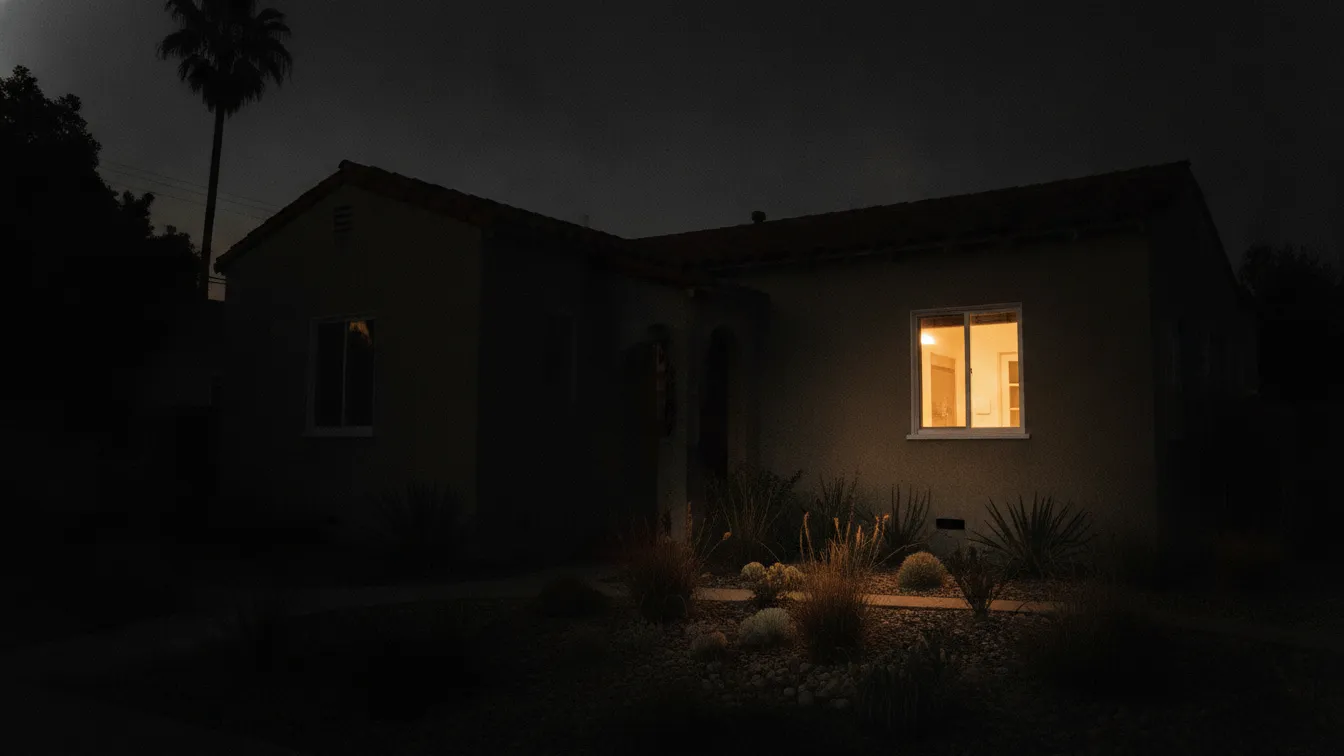
Wall insulation in Los Angeles
Walls with thin or empty cavities let the weather straight through a finished house. We fill them through small holes and close each one afterwards.
Wall insulation fills the cavity between the studs, and a finished wall can be filled without taking it apart.
The usual method for an existing house is blown-in insulation, a retrofit often called drill and fill. Small holes are made into each cavity, the insulation is blown in until the cavity is densely packed, and the holes are closed and finished.
We insulate walls in houses across Los Angeles and Ventura County, from Santa Monica, Beverly Hills and Culver City to Pasadena, Thousand Oaks and the South Bay. Walls are one part of a house, so if you are weighing this against other work, start with all our insulation services.
Signs a wall needs a look
Walls hide their insulation, so the signs are indirect. These are the ones that send homeowners to ask.
Exterior walls that swing with the weather
A wall that feels warm in the afternoon and cold in the evening, long after the weather has changed, may have little behind the plaster or drywall.
Drafts at outlets and baseboards
Air moving through gaps around pipes and wiring in an exterior wall is a sign the cavity is open. Sealing those gaps is part of the job.
An older house with no record of its walls
California's first building energy standards took effect in 1978. A house built before then can have empty or thin cavities, so we check before we assume.
Insulation of unknown condition
Old batts can sag, settle or get damp. A wall that was insulated long ago still deserves a look.
A re-siding or remodel about to start
Exterior work is the easiest time to reach the cavities, and the wall is already open.
A room that never settles
The room that is always the hottest or the coldest often has an exterior wall, a west face or an unfinished cavity behind it.
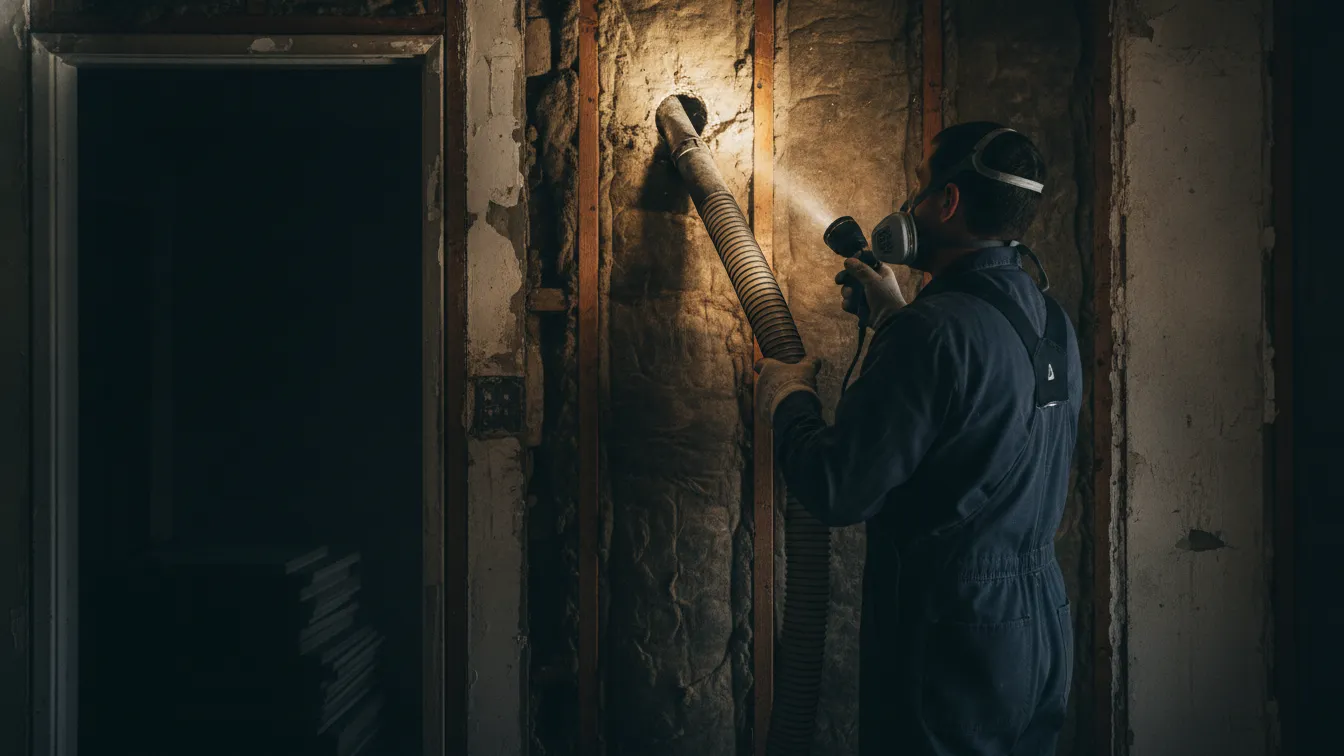
How blown-in wall insulation works
Blown in wall insulation is installed from either side of the wall. Round holes are made in the center of each stud bay near the top, and a lower hole is added where the cavity needs it to fill completely. More holes go above and below blocking, over door headers, around windows and behind cabinets on exterior walls, so no pocket is missed.
The material is blown through a hose until the cavity is packed to the density the manufacturer specifies. Packing it that way is what stops it settling. Infrared imaging can show framing, blocking and voids before and after filling.
Then the holes are closed. Inside, they are plugged and finished with joint compound, sanded and ready to paint. Outside, the weather barrier behind the siding has to be repaired before the siding goes back, because that layer keeps water out of the wall.
Materials and methods
Dense-packed blown cellulose and blown fiberglass are the common choices for wood-framed walls with drywall inside. Both conform to the odd shapes around wiring, pipes and framing, and both suit a retrofit.
- Blown-in cellulose or fiberglass. The standard drill and fill product for a finished wall.
- Spray foam. Used where the wall is open or where the conditions call for it. See our spray foam insulation page.
- Rigid foam. A board product that suits a wall being rebuilt or re-sided, not a closed cavity.
Which one fits depends on what the wall is made of and how we can reach it.
What we check before we drill
A closed wall can hold surprises, and a few of them change the plan.
- What is already inside. Sagging or deteriorated batts can block the new material, and a strip may have to be removed near the floor.
- Old wiring. Knob-and-tube wiring cannot be buried in insulation under the electrical code, so a wall that has it is not filled.
- Vermiculite. Loose gray-brown or silver-gold pebbles in a wall or attic may contain asbestos. Federal guidance is to leave them alone and bring in a trained asbestos professional.
- Lead paint. Work in houses built before 1980 can fall under lead-safety rules, depending on how much wall work is done.
- Framing. Balloon-framed walls need blocking at the top and bottom before the cavities can be packed, and bracing can leave voids that imaging helps to find.
- Rodents. Wall voids are among the places roof rats nest. If there are signs of a nest, the first job is rodent-damaged insulation.
Who it suits and how it fits with the other services
Wall insulation suits a house whose cavities are empty, thin or in poor condition, and it is easiest when the walls are being re-sided or opened for a remodel. It does not replace the rest of the envelope.
Walls are one of several places heat moves, so we look at the whole house with you. The roof side is covered by attic insulation and the radiant barrier, and a house on a raised foundation also has crawl space insulation to consider. We tell you which one is worth doing first for your house.
What the visit looks like
You tell us about the house
When it was built, whether the walls are stucco or siding, and which rooms are the problem. A photo of the attic and of an outlet cover can help.
We look before we drill
We check the attic and the wiring, look at what is in the cavities and decide where the holes go. If the walls are not a good candidate, we say so.
We fill and close each cavity
Insulation is blown in until each cavity is packed, and each hole is plugged and finished on the inside or restored behind the siding on the outside.
We check the work
Before we leave, we confirm the cavities took the fill, the holes are closed and the working area is left clean.
Wall insulation questions
What insulation do you put in walls?
In a finished wall, the usual choice is blown-in cellulose or fiberglass, packed densely into each cavity. Spray foam and rigid foam are used where a wall is open or being rebuilt. The right one depends on how the wall is built and how we can reach it.
How do I know if my walls are insulated?
You cannot see inside a closed wall. Infrared imaging shows framing, blocking and gaps, and a small opening shows what is in the cavity. Looking at the age of the house and at the attic helps too, because it tells us what was done to the rest of the house.
Can you put too much insulation in walls?
A cavity has a fixed depth, so the aim is a cavity filled evenly to the density the material calls for. The usual shortfall is the opposite, with gaps around blocking and bracing, which is why extra holes are made around obstructions. How a wall handles moisture depends on its construction, and we consider that before any fill goes in.
Will insulating my walls mean opening them up?
Not for drill and fill. Small holes are made from inside or outside, the cavities are filled and the holes are closed. Inside holes are patched and finished for paint. Outside holes need the weather barrier restored before the siding goes back.
How to replace insulation in walls?
Most walls are not emptied. If the old insulation is sagging or damaged, the work depends on how much of it is in the way, and sometimes a strip is removed so the new fill can reach the whole cavity. A full replacement usually comes with a remodel, when the wall is already open.
Thinking about the walls of an older house? Tell us how it was built and we will tell you whether drill and fill suits it.
Get started
Get your walls looked at
Call us, or send the form and we will call you back. We work across Los Angeles and Ventura County, and we are licensed and insured.