
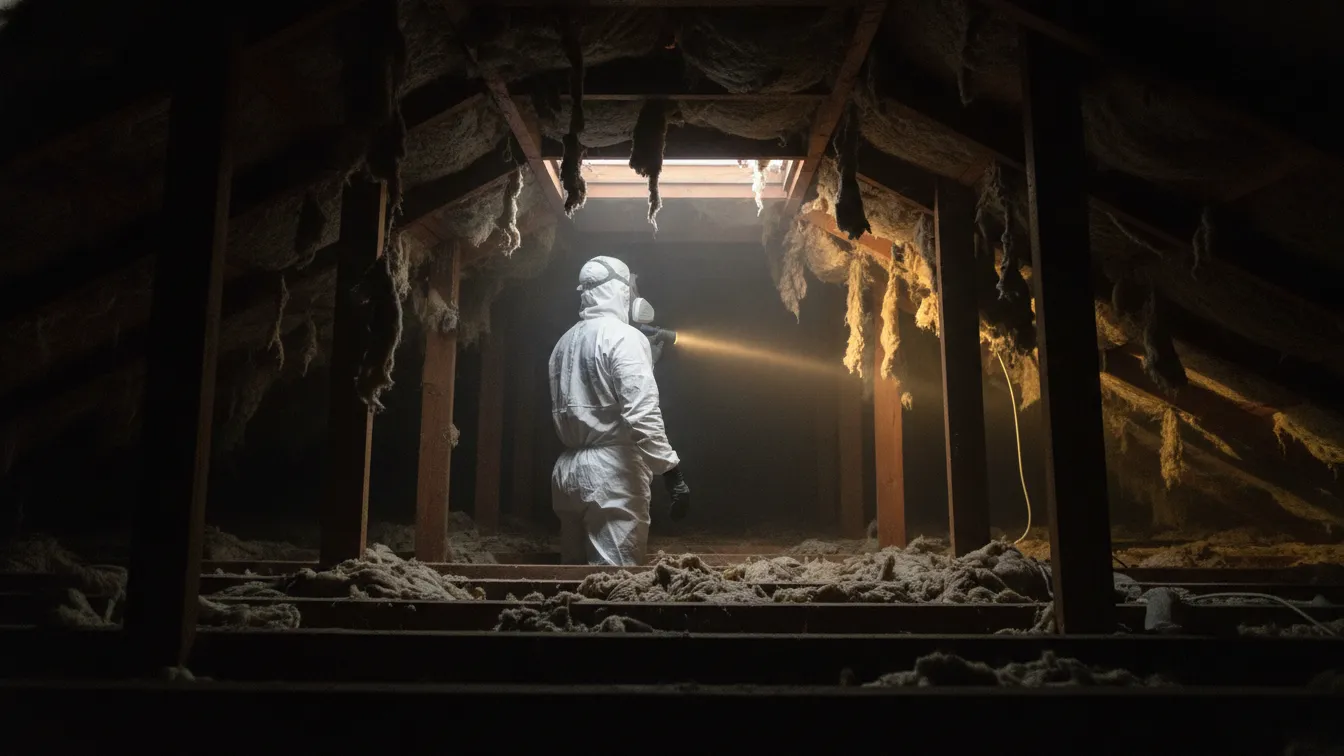
Rodent attic cleanup and insulation replacement
Insulation shredded, matted or soiled by rats and mice taken out, the attic cleaned, and fresh insulation put back. Licensed and insured.
Rodent attic cleanup is the work that comes after the rodents are dealt with. The soiled insulation comes out, the attic is cleaned, and new insulation goes in.
Insulation that rats have nested in and soiled does not recover. It has to be removed, not covered.
We do this work in houses across Los Angeles and Ventura County, including Santa Monica, Hollywood, Pasadena, Calabasas and Thousand Oaks. The cleanup is one part of a bigger job, so start with all our insulation services if you want to see how it fits with removal and new insulation.
What rodents do to attic insulation
Rats and mice use insulation as nesting material and as a floor to run across, and the damage follows a pattern.
Shredded for nests
UC Statewide IPM notes that roof rats shred insulation in walls and ceilings to line their nests. A nest is a pile of loose, torn material, not a layer.
Soiled with droppings and urine
Insulation holds what lands on it. Droppings and urine soak into the material and its dust is what gets stirred into the air when someone works in the attic.
Matted and tunneled
Runways pressed through loose-fill and compressed batts leave gaps and thin spots, so the insulation no longer covers the floor evenly.
Gnawed wiring nearby
UC IPM says attic nesting and gnawing can cause electrical sparks and fires. Wiring in a rodent-damaged attic is worth having an electrician look at.
Smudges and runways
Dark rub marks on beams, rafters and pipes, noises from the attic and droppings near food are the signs UC IPM lists for roof rats.
Entry points left open
Gaps larger than a quarter inch let rodents in. Sealing them is what stops new damage, and it should be done before new insulation goes in.
Why roof rats end up in attics
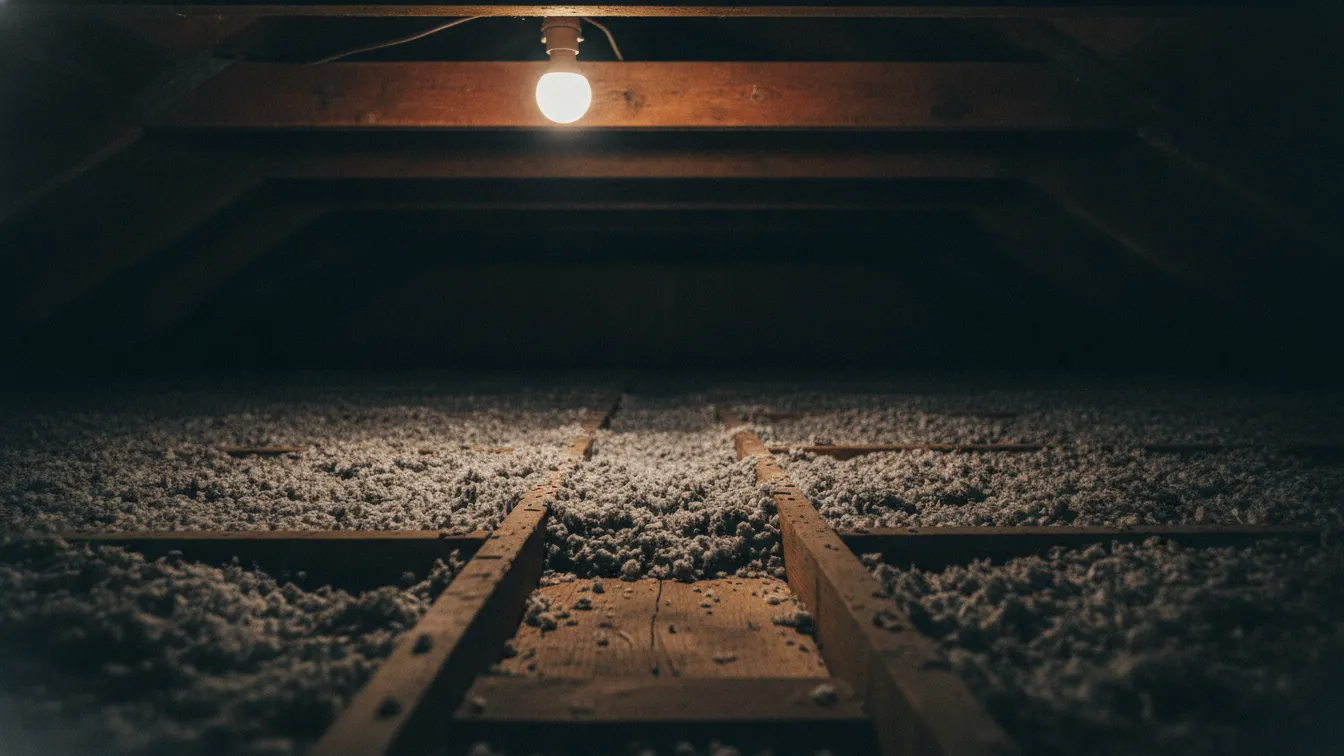
UC Statewide IPM says they prefer warm climates and coastal ecosystems, and that they typically nest in enclosed, elevated spaces such as attics, wall voids and ceiling voids. They travel up to 300 feet or more for food, so a neighbor's fruit trees can draw them to a house.
UC IPM describes them as agile climbers that travel along fences and utility lines, so openings above ground level matter as much as those at the foundation. UC IPM recommends sealing every hole larger than a quarter inch, and notes that rats can chew through plastic, foam, wood and caulk, which is why it points to steel wool, wire screen and sheet metal.
This is a description of how roof rats behave. It is not a claim about any city or street.
What the cleanup involves
Rodent cleanup is insulation removal with stricter handling, followed by cleaning and new insulation.
- Protect the way in. The hatch and the route to it are covered so that nothing is carried through the living space.
- Remove the contaminated material. Soiled loose-fill is vacuumed out through a hose to a collection point outside, and batts are rolled and bagged. Nests and droppings go out with it.
- Clean the framing and decking. The surfaces are vacuumed and cleaned. Insulation cannot be washed, which is why it is replaced rather than treated.
- Replace what was removed. New attic insulation goes onto a clean floor once the entry points are sealed.
The general work of taking old material out is described on our insulation removal page. This page is for the case where rodents are the reason.
Safety around droppings and nests
The advice here comes from public health sources, and it is the reason this job is not left to a quick sweep with a broom.
- Do not sweep or vacuum dry droppings or nesting material. The CDC says doing so can release particles into the air.
- Wet the material first. The CDC advises soaking droppings, urine and nests with a disinfectant or bleach solution and letting it sit for about five minutes, or as the label says.
- Wear gloves, and a respirator for heavy contamination. The CDC recommends rubber or plastic gloves, and respiratory protection such as a half-mask respirator with a HEPA filter for heavy infestations.
- Ventilate and wash. The CDC advises airing out the space for 30 minutes first, and washing hands with soap and warm water afterward.
- Rats carry disease. UC IPM lists typhus, leptospirosis and rat bite fever among the illnesses linked to rats, and says never to touch rodents with bare hands.
If the attic is large or heavily soiled, this is a good reason to have it handled by people with the equipment and the training.
Cleanup, pest control and new insulation
A rodent problem in an attic has three parts, and they should happen in that order. First, the rodents are removed and the entry points are sealed. UC IPM names snap traps as the safest and most effective way to remove roof rats, and it stresses that sealing is what keeps them out. Second, the soiled insulation is taken out and the attic cleaned. Third, new insulation goes in.
The cleanup and the new insulation are our part of the sequence. If you are still hearing noises, deal with the first part before the cleanup, because new insulation put down over an active nest is wasted. UC IPM also says roof rats have strong nest-site affinity, which means they return to a site unless the nest material is removed. That is part of why the old insulation comes out.
What the work looks like
You tell us what you have found
Droppings, noises, a smell, or insulation that looks torn up. A photo from the hatch helps.
We look at the attic
We check how far the damage extends, what kind of insulation is there, and whether the entry points have been sealed.
The contaminated insulation comes out
It is removed with the stricter handling described above, and the framing and decking are cleaned.
New insulation goes in
The attic floor is covered again with new insulation, and the working area is left clean.
Rodent attic cleanup questions
How do I clean up after rats in my attic?
Do not sweep or vacuum dry droppings or nests. The CDC advises airing the space, wearing gloves, wetting the droppings and nests with disinfectant, and wiping them up. Soiled insulation cannot be washed, so it is removed and replaced, and in a large attic the work calls for proper equipment.
Will rodents leave an attic on their own?
Not reliably. UC IPM says roof rats have strong nest-site affinity, so they tend to return to a site unless the nest material is removed. Sealing the entry points and removing the rats come first, then the soiled insulation.
What is the most effective way to get rid of rodents in my attic?
UC IPM names snap traps as the safest, most effective option, together with sealing every opening larger than a quarter inch. Once the rodents are gone, we clean up the attic and replace the insulation.
Does insulation need to be replaced after rats have been in the attic?
When rats have nested in it or soiled it with droppings and urine, yes. The material holds the contamination and cannot be washed. Thin, clean areas can sometimes stay and be added to, which we judge in the attic.
Is it safe to go into an attic with rat droppings?
It calls for care. The CDC says not to sweep or vacuum dry droppings and to wear gloves, with respiratory protection for heavy infestations. If you must go in, keep it brief, and if the contamination is widespread, leave it to people with the equipment.
Found droppings, torn insulation or a smell in the attic? Tell us what you see and we will explain what the cleanup involves.
Rodent attic cleanup
Get the attic cleaned and insulated again
Call us, or send the form and we will call you back. We work across Los Angeles and Ventura County, open every day, every day, 7 a.m. to 11 p.m.